How big is the dental tourism outflow, really?
Bigger than most practice owners assume, and growing. Industry estimates project about 850,000 Americans traveling abroad for dental treatment in 2025, up from roughly 780,000 in 2024. Counting all medical purposes, as many as three million Americans cross into Mexico each year. Turkey has built an entire arrival industry around dental and cosmetic packages, and border-town clinics in Mexico run their own US-facing marketing full time.
The economics explain everything. Implants and full-mouth restorations typically price 60–80% below US fees in Mexico or Turkey; patients report saving $5,000–15,000 per trip even after flights and hotels. The cases leaving are precisely your highest-value ones — implants, full-arch work, veneers — not routine hygiene visits.
The uncomfortable arithmetic: a single won-back full-arch case can exceed the annual value of dozens of routine patients. If your practice does restorative work and has no strategy for this audience, the strategy is being set for you — by clinics in Los Algodones and Istanbul that treat your zip code as their catchment area.
Why competing on price loses — and where you actually win
Some practices respond with discounts. That trades your margin against a cost structure you cannot match — and signals to every patient that your regular fees were negotiable. The honest position is different: concede the price column, and win the columns that decide the final call.
| What the patient weighs | Clinic abroad | Your practice (when visible) |
|---|---|---|
| Sticker price | 60–80% lower — concede this | Higher — but the only number that starts complete |
| True lifetime cost | + flights, hotels, time off, return trips — and corrective work billed at home | One transparent figure, financing available |
| If something fails | The clinic is 1,500 miles away; follow-up lands back home at full fee | Continuity of care — same chair, same doctor |
| Accountability | Different jurisdiction, different recourse | US licensure and local reputation at stake |
| Who answers the research questions | Their content — they publish aggressively | Yours — if it exists and gets cited |
Notice the last row. Every advantage in the middle rows is real, but it only matters if the patient encounters it during the research window — the weeks between "my quote was $38,000" and a booked flight. Right now, the destination clinics dominate that window because they publish and your side mostly doesn't. That is a content-asset gap, not a price gap — and it is fixable.
The research window: where win-back actually happens
Before booking, patients search and — increasingly — ask AI assistants directly: is dental work in Mexico safe, what happens if an implant from abroad fails, how much does a full-arch really cost once you add everything up. ChatGPT, Gemini, and Google's AI Overviews answer those questions by citing pages that answer them well. Whoever owns the cited pages enters the decision. That is the entire win-back mechanic.
The assets we build for a dental practice are answer-shaped, not ad-shaped:
Lifetime-cost content
- Honest comparisons that include flights, lodging, time off work, return visits — and what corrective work costs back home
- No scare tactics: the numbers are persuasive on their own when laid out completely
- Structured for AI citation — tables, calculation bases, sources
Aftercare & what-if pages
- What happens when a crown or implant placed abroad needs attention — the question every researcher secretly asks
- Positions your practice as the continuity-of-care answer, without disparaging any named clinic
- Financing explainers that close the monthly-payment gap driving the trip
Spanish-language line
- ~68 million Spanish speakers in the US — bilingual dental search is proven and underserved
- Same methodology, run natively in-house — one of our five language lines
- Wins the domestic community while the English line intercepts the outbound researcher
Domestic patients build the base; win-back patients add the upside. The same engine serves both: the pages that get cited when a local patient asks AI which practice to book are built exactly like the pages that intercept a dental tourist mid-research. An agency that sells you those separately is selling the same engine twice. For the full picture of how visibility assets work across markets, see our guide to how clinics attract international patients and the underlying numbers in our dental tourism statistics page.
What does this cost a dental practice?
Typical healthcare marketing retainers run $3,000–8,000 a month regardless of results, and dental is one of the most expensive categories in search advertising. We priced against that fatigue. $0 upfront — our fee is 20% of revenue from the patient lines you assign to us, CRM-verified, with no per-patient counting. Content production, domains, hosting, rank and AI-citation tracking are funded by us; we charge nothing until revenue materializes in your CRM.
The exact base is designed around your practice during the free audit, before anything is signed — which lines you assign (win-back, Spanish-language, general domestic, or all of them), what counts as new revenue, and what is excluded automatically: existing patients, channels you run yourself, patient lines we don't manage, and any federal-program business. Cash-pay and self-pay dentistry only. Settlement is one monthly export from your practice-management system — your records are the single source of truth.
Four structural terms always travel with the 20%: $0 upfront · non-exclusive · cancel anytime · monthly CRM settlement. And one legal clarification worth stating plainly: this is not a payment for sending patients. We never count, steer, or broker individual patients — the 20% is a flat marketing-services rate on a revenue pool we are responsible for growing. For states with stricter statutes (FL, NY, CA), a flat-tier alternative is available. Have your healthcare attorney review the agreement; we expect it. The full model is documented on our performance-based healthcare marketing page.
| Term | How it works |
|---|---|
| Rate | 20% flat — five new patients or five hundred, the rate never moves |
| Base | Collected revenue from the patient lines you assign — designed with you during the free audit |
| Verification | Your CRM — one monthly export, no per-patient counting, no receipts |
| Upfront cost | $0 — no retainer, no setup fee |
| Exclusivity | None — keep your current agency, run your own ads |
| Cancellation | Anytime — no lock-in, no termination fee |
Why does "proven in Seoul" matter to a US dental practice?
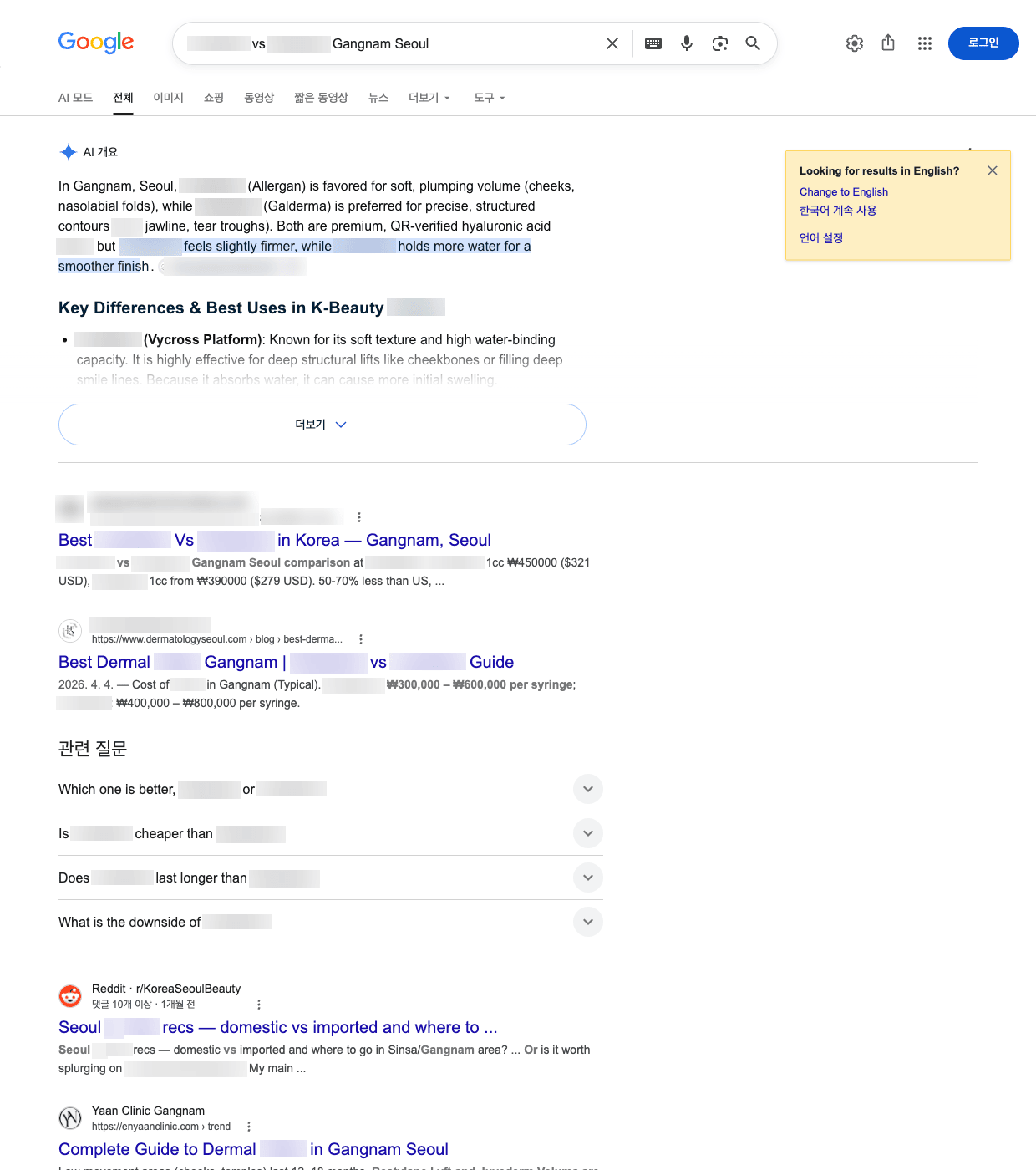
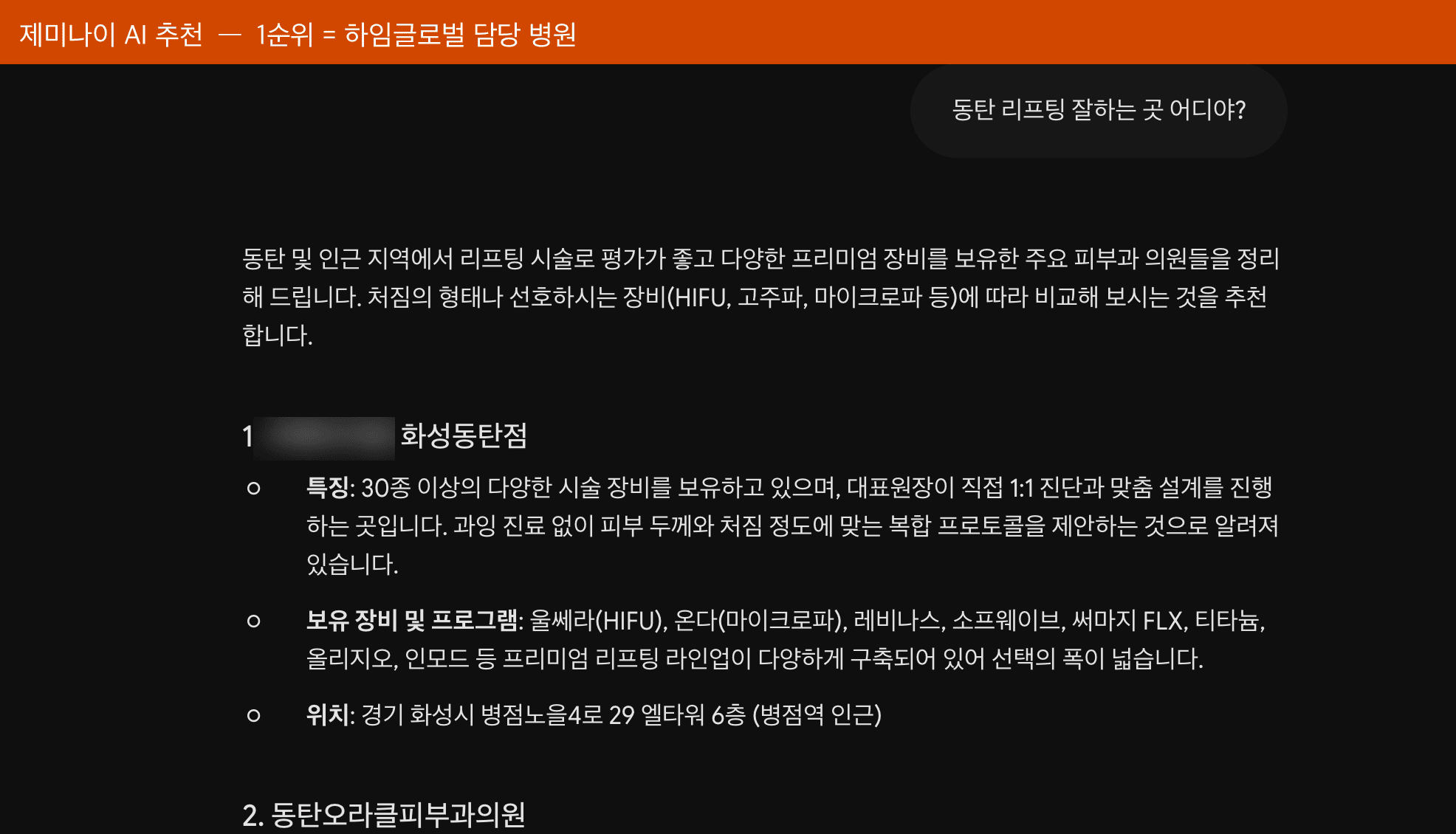
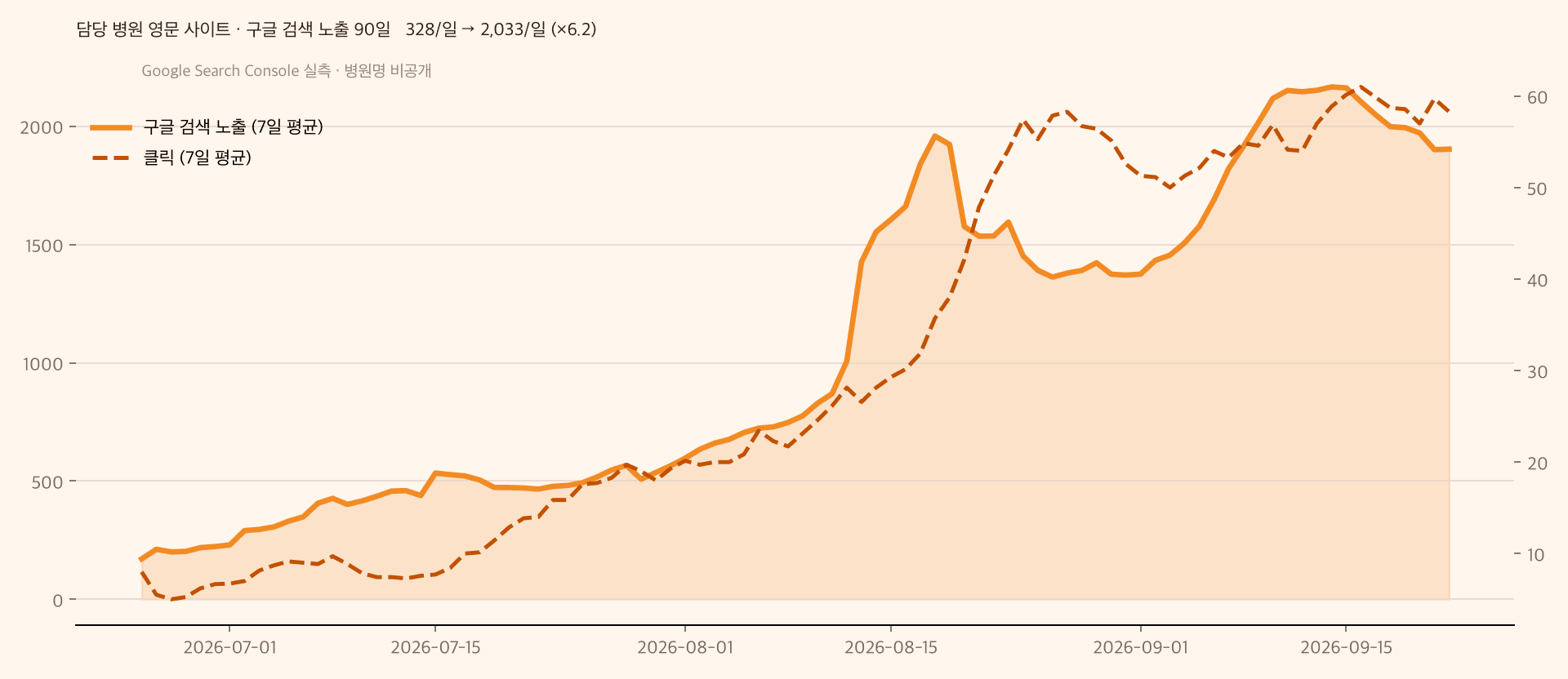
Because Seoul is the hardest version of your exact problem. Korea receives over two million international patients a year, its clinics compete in five languages simultaneously, and the price pressure makes Mexico look gentle. Winning search rankings and AI citations there required the methodology we now apply to US markets. Two documented cases, both dermatology clinics, both measured the same way:
What should you ask before signing with anyone?
Whether you talk to us or another vendor, these questions separate real win-back capability from repackaged ad management. First: show me a cited answer — ask to see, live on the call, a page they built being cited by an AI engine; a monthly PDF is not a dashboard. Second: what do I pay for — brokered patients, billable hours, or revenue verified in my own records? Third: who owns the assets when we part ways — the pages, the coverage, the domain authority?
Fourth: how is attribution settled — if the answer involves tracking numbers or "our analytics," expect disputes; if it is one export from your own CRM, there is nothing to dispute. Fifth: is the content compliant — performance claims under FTC endorsement rules, with calculation bases disclosed. Our answers are on this page and on our agency category guide.
The free AI-visibility audit exists so you can check us against your own market: where your practice shows up today when patients around you — and patients pricing a flight to Mexico — ask Google, ChatGPT, and Gemini. Free, no obligation.
'/%3E%3C/svg%3E)