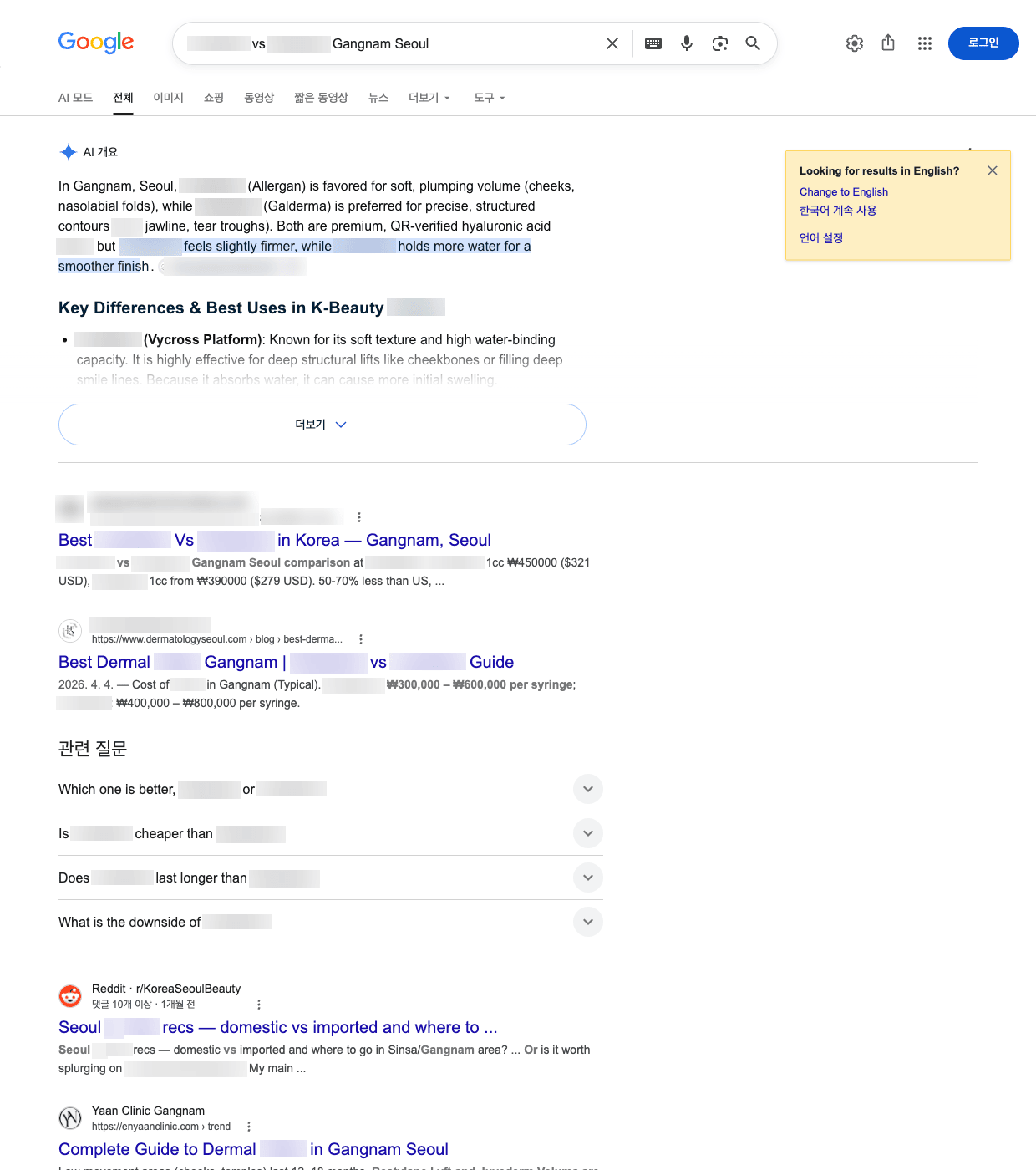

What does an international patient department actually do?
Strip the title away and the function has four jobs. Visibility: making the clinic findable to patients who search, read, and ask AI in languages other than English — which today means content assets, search rankings, and citations inside ChatGPT, Gemini, and Google’s AI Overviews. Response: answering inquiries in the patient’s language, on the patient’s messenger, at the patient’s hour — a patient researching from Riyadh or Taipei does not inquire during your front desk’s shift. Coordination: the non-clinical journey — documents, scheduling context, expectations, follow-up. Accounting: reporting what the operation actually produced, in revenue, in a form the owner can verify.
The institutions that do this well are exactly the ones you would expect: Mayo Clinic serves patients from some 130 countries through a dedicated international services operation, and Cleveland Clinic runs the equivalent. That is the model everyone copies — and the model almost no clinic below hospital scale can afford to copy, because it is built on permanent multilingual staffing. Which raises the real question for a practice owner: do you need the department, or do you need the function?
The headcount math nobody shows you
Here is the arithmetic that kills most in-house plans before the first hire clears onboarding. A week contains 168 hours. One full-time employee covers about 40 of them. Staffing a single around-the-clock response seat therefore takes roughly 4.2 full-time hires — and that is the naive floor, before annual leave, sick days, training, and the turnover that bilingual coordinator roles are notorious for. It also buys you exactly one language. Cover the languages a genuinely international patient base uses — Spanish, Chinese, Japanese, Arabic — and every addition multiplies the roster or degrades the coverage.
Most clinics quietly compromise: one bilingual hire, business hours only, English voicemail after six. The result is a department in name that loses inquiries at precisely the moments international patients send them. And the compromise still isn’t cheap — it is fixed payroll from month one, layered on top of whatever you already pay for marketing (typical healthcare retainers run $3,000–8,000 a month, results or not). Payroll doesn’t scale down in a slow quarter; it just sits there.
| What you're comparing | In-house department | One bilingual hire (the usual compromise) | Outsourced department (us) |
|---|---|---|---|
| Coverage | 24/7 — if you staff ~4.2 FTEs per seat | ~40 hours/week, one language | 24/7, five languages, operated in-house by us |
| Cost structure | Fixed payroll + benefits + turnover | Fixed salary regardless of volume | $0 upfront — 20% of revenue from assigned lines only |
| Visibility asset | Separate marketing budget on top | None — a responder, not a channel | Multilingual pages, rankings, AI citations — funded by us |
| Slow month | Payroll unchanged | Salary unchanged | Fee shrinks with revenue — automatically |
| Verification | Internal reporting | Anecdote | Your CRM — one monthly export, no per-patient counting |
| If you stop | Severance; asset walks out the door | Rehire from zero | Cancel anytime — content assets keep working |
What does the outsourced department include?
Three layers, all funded by us — that is what $0 upfront means in practice. Layer one, the visibility asset: multilingual pages written natively in the languages your market needs, structured to rank on Google and to be cited inside AI answers, tracked daily across four engines and weekly across 2,050 keywords. This is the same production system behind the 7,700+ pages we operate in-house — and it is what a hired coordinator can never give you, because a responder is not a channel. Layer two, the response line: inquiries answered 24/7 in the patient’s language on WhatsApp, LINE, WeChat, and email, then handed to your team as a structured, complete brief — not a forwarded voicemail.
Layer three, the accounting: monthly settlement read from your own CRM. One export closes the month; there is no per-patient counting and nothing to dispute, because the source of truth is yours.
One boundary, stated plainly because it matters both operationally and legally: we handle language and logistics, never medicine and never brokering. Diagnosis, treatment planning, pricing conversations, and the final booking always happen between your staff and the patient. We never count, steer, or broker individual patients — the fee design depends on that line, and so does your regulatory comfort. How this differs from a facilitator relationship is mapped in full at what an international patient marketing agency actually does.
Who actually needs an international patient function — and where?
Honesty first: not every clinic does. The audit exists to tell you which of these you are — before anything is signed.
UK — the clearest case
- London treats 100,000+ overseas patients a year, concentrated in the self-pay market around Harley Street — Gulf and high-net-worth inbound with existing budgets
- Arabic-language visibility plus 24/7 Arabic-capable response is precisely the function most consultant practices lack — see attracting Gulf patients to a London clinic
- Content produced with GMC and ASA/CAP standards in mind
US — gateway cities and language lines
- Miami, Houston, LA, NYC: international patients arrive through community and family networks — and 68 million domestic Spanish speakers make the “international” department a multilingual one first
- Cash-pay and self-pay services only; any federal-program business is excluded from the fee base
- Domestic patients build the base, international patients add the upside — one engine, both lines
AU — IVF and community-led
- IVF clinics see genuine inbound from Southeast Asia and Chinese-speaking markets — the rare small-clinic segment where international demand is real
- Sydney and Melbourne’s Chinese-speaking communities are addressable in their own language, on their own messengers
- All content written to AHPRA’s 2025 advertising guidelines — no patient testimonials, no outcome claims
For the segment-by-segment view of where inbound demand is real and where it is wishful, see the honest playbook on attracting international patients.
What should the outsourced department cost?
The model, in full, because a pricing section hidden behind a sales call is its own red flag. $0 upfront — our fee is 20% of collected revenue from the patient lines you assign to us, CRM-verified, with no per-patient counting. The visibility asset, the 24/7 response line, the tracking, domains, and hosting are all funded by us. Against the alternatives — a fixed payroll roster plus a $3,000–8,000 monthly retainer — the structural difference is simple: our fee only exists when the revenue does. A slow month costs you 20% of not much; a strong month costs 20% of a number you are happy to see.
The exact base is designed around your clinic during the free audit — which lines you assign (international, foreign-language, or both), what counts as new revenue, and what is excluded automatically: existing patients, channels you run yourself, lines we don’t manage, and any federal-program business in the US. Four structural terms always travel with the 20%: $0 upfront · non-exclusive · cancel anytime · monthly CRM settlement.
And the legal clarification, unprompted: this is not a payment for sending patients. The 20% is a flat marketing-services rate on a revenue pool we are responsible for growing — we never count, steer, or broker individual patients. For US states with stricter statutes (FL, NY, CA), a flat-tier alternative is available. Have your healthcare attorney review the agreement; we expect it. The wider comparison of pricing models sits at performance-based healthcare marketing.
| Term | How it works |
|---|---|
| Rate | 20% flat — five new patients or five hundred, the rate never moves |
| Base | Collected revenue from the patient lines you assign — designed with you during the free audit |
| Verification | Your CRM — one monthly export, no per-patient counting, no receipts |
| Upfront cost | $0 — no retainer, no setup fee, no payroll |
| Exclusivity | None — keep your current agency, keep your current staff |
| Cancellation | Anytime — no lock-in, no termination fee; content assets keep working |
Where has this department model actually run?
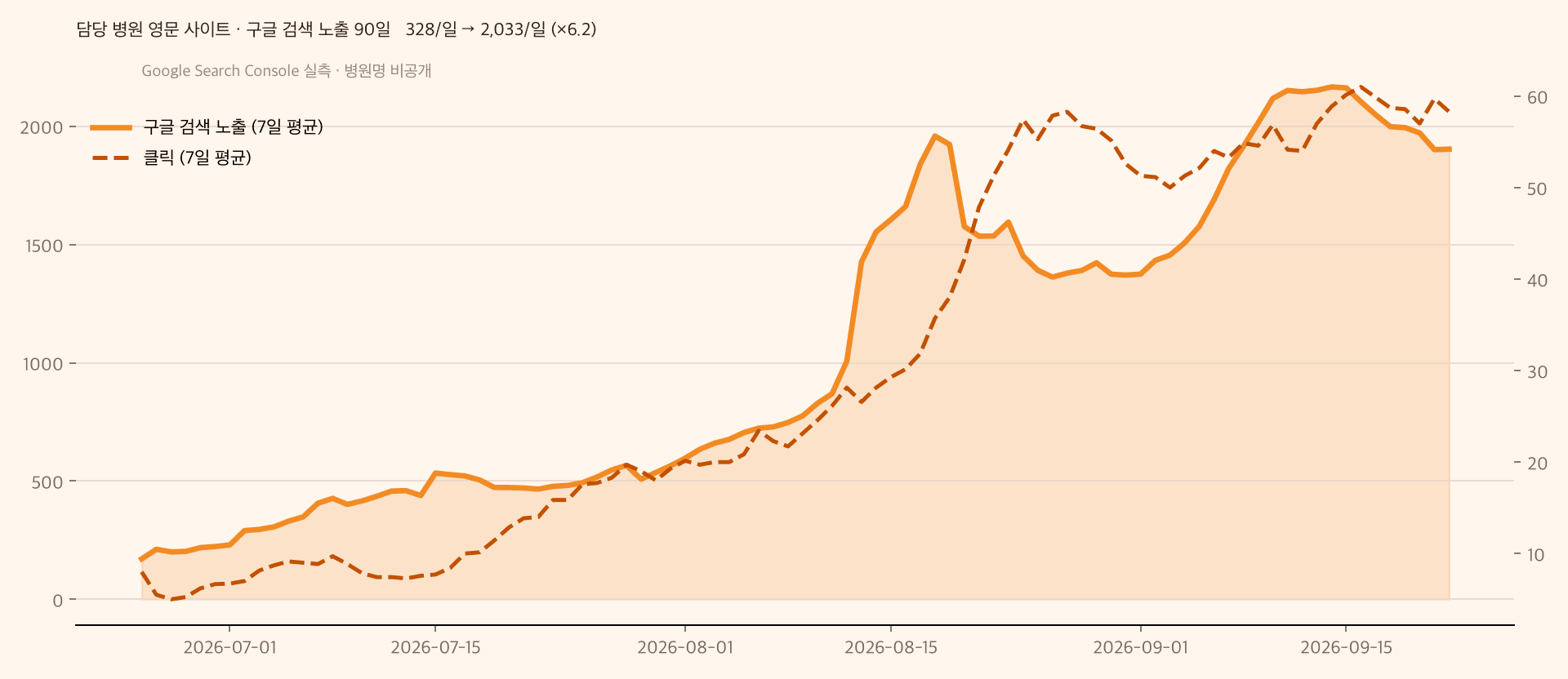
Seoul — the world’s most competitive medical tourism market, with two million international patients a year and clinics competing in five languages at once. The outsourced-department stack described on this page is not a proposal; it is the system we already operate there: 7,700+ multilingual pages, 24/7 response across five language lines, monthly CRM settlement. Two documented cases, both dermatology clinics, both measured the same way yours would be:
How to decide: build, hire one, or outsource?
Ask three questions of any option, including ours. First: what does month one cost if zero international patients book? In-house: full payroll. Single hire: full salary. Outsourced on our model: $0 — the fee is 20% of revenue that materialized, and none did. Second: what accumulates? A roster produces coverage while you pay for it; content assets — pages, rankings, citation history — keep producing after the work is done, and they stay with your clinic. Third: how is the result verified? If the answer is anyone’s spreadsheet but your own CRM, expect disputes.
The starting point is the same regardless of what you choose: the free AI-visibility audit. Twenty minutes, screen-shared — where your clinic appears today when patients search and ask AI in the languages of your market, which lines are worth assigning, and an honest read on whether your market justifies the function at all. If it doesn’t, we will say so; auditing honestly is cheaper than onboarding a clinic the model can’t serve. Clinics whose visibility gap is specifically in search can start narrower, with medical tourism SEO or the broader build at multilingual patient acquisition.
'/%3E%3C/svg%3E)