What is multilingual patient acquisition?
Multilingual patient acquisition is the discipline of winning patients in the languages they actually search, ask AI assistants, and send messages in. It is a system with three working parts: content assets built natively per language — pages that rank in that language's searches and get cited in that language's AI answers; a market map that ties each language to a specific, reachable patient population rather than a vague notion of "international"; and a response layer that answers every inquiry in the patient's own language, on the messenger they already use, at whatever hour they write.
The term barely exists as a category yet, which tells you something about the supply side: most clinics run one language line — their own — and most agencies sell translation as if it were the same thing. It is not. A patient searching in Spanish, or asking Gemini in Traditional Chinese, is invisible to a clinic whose entire footprint is English. Each additional language line switches on a slice of the market that was always there, walking past the practice, booking elsewhere or nowhere.
Both halves of a practice benefit. Domestically, the communities inside your patient radius search in their own languages every day. Internationally, patients researching treatment from abroad do the same. The same line serves both — which is why this page treats domestic and international as one build, not two budgets.
The five language lines — and the market each one reaches
These are the five lines we operate in-house today, at a combined scale of 7,700+ pages. Each maps to a patient population you can name, count, and reach — the mapping below is the starting grid the free audit refines for your specific location and specialty.
| Language line | Who it reaches | Where it matters most |
|---|---|---|
| English | Your domestic base — and the default research language of international self-pay patients | Everywhere: it carries local AI-search visibility in the US, UK, and AU, and every other line compounds on the authority it builds |
| Spanish | 68 million Spanish speakers in the US, searching for care in Spanish | US gateway and community markets — dental and aesthetic practices in cities like Miami, Houston, and Los Angeles |
| Chinese · Traditional | Chinese-speaking communities in Sydney and Melbourne; patients in Taiwan and Hong Kong researching care abroad | Australia's community acquisition play, plus inbound research for IVF and screening |
| Chinese · Simplified | Mandarin-speaking patients researching in Simplified script — local communities and cross-border research alike | Pairs with the Traditional line to cover the full Chinese-language search market on WeChat-native channels |
| Japanese | Japanese-speaking patients researching clinics in Japanese, at home and abroad | The line where our Seoul-built asset base runs deepest — operated at scale within the 7,700+ pages, answered on LINE |
Two honest notes on the map. First, not every clinic needs all five lines — a line is only worth building where a population exists to reach, which is precisely what the audit establishes before anything is signed. Second, the methodology is language-agnostic: lines we do not operate today, such as Arabic for London's Gulf-facing market, are scoped case by case rather than promised by default — the honest version of a language list is the one you actually run. For the deep dives per market, see the Spanish SEO for dentists page for the US play and the Gulf patients in London page for the UK inbound story.
Why doesn't translating your website accomplish this?
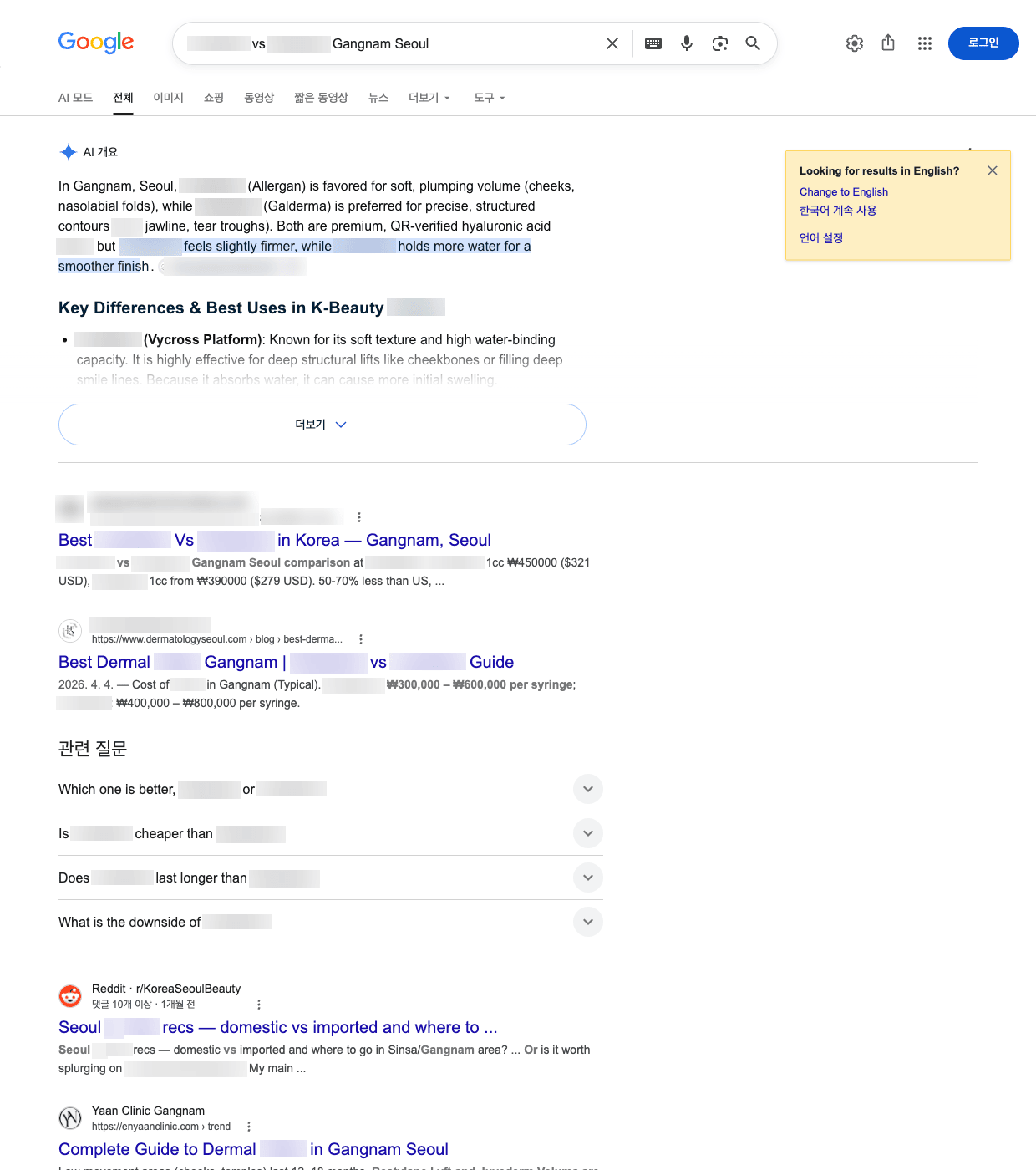
Because translation copies answers, and acquisition starts from questions. A translated services page carries English questions into Spanish grammar — but the patient searching in Spanish asks different things, in different words, with different worries in a different order. Search engines score that mismatch ruthlessly, and AI assistants simply cite someone else.
A native language line is built the other way around. It starts from what patients in that language actually type and ask — the procedure terminology they really use, the comparisons they make, the anxieties that surface in their forums — and writes original pages that answer those questions, with structured data in that language and the contact channel that language expects. The difference shows up in three places: rankings, because the page matches real queries; AI citations, because engines answering a Chinese question cite Chinese sources; and conversion, because a patient who found you in their language and can message you in it has no reason to keep shopping.
There is also a structural bonus most owners have not priced in: non-English lines face far thinner competition. For almost any local market, the number of clinic pages competing in Spanish or Japanese is a small fraction of the English field — the same effort buys a much larger share of visibility. How AI engines choose what to cite — and how we build for it — is published openly on the how AI recommends clinics page.
Who answers when the inquiry arrives at 2 a.m.?
Content without response is a billboard in a language your front desk cannot answer. The second half of the system is the 24/7 multilingual response layer, and it is funded by us as part of the engagement, not billed as an add-on.
It works like this. A patient who found a page in their language writes on the messenger that language lives on — WhatsApp for English and Spanish speakers, LINE for Japanese speakers, WeChat for Chinese speakers — or through the site form. Our team answers in the patient's language, whatever the hour, handles the qualifying back-and-forth (what they are looking for, timing, budget seriousness), and passes your front desk a summarized, English-language booking request. Your staff schedules a consultation; nobody at your clinic learns a new messenger or works a night shift.
The channel detail matters more than it looks. Publishing in a patient's language and then offering only an English phone line or a web form undoes the trust the content built — the reply channel is part of the language line, which is why every line ships with its native messenger from day one. For practices whose real need is the full inquiries-to-bookings desk — intake, scheduling, follow-up across languages — the international patient department outsourcing page covers that heavier configuration.
What does a 7,700-page multilingual asset base look like in operation?
The number is not a boast; it is the operating scale that makes the model work, and every part of it is inspectable on the audit call.
Production — native, in-house, per line
- 7,700+ pages live across the five language lines — researched and written natively, never machine-translated and published
- Every page built to answer a real patient question, with structured data in its own language
- Compliance built in per market — AHPRA 2025 guidelines in Australia, GMC and ASA/CAP standards in the UK, FTC endorsement rules in the US
Measurement — per language, not in aggregate
- 2,050 keywords tracked weekly, automated, across languages
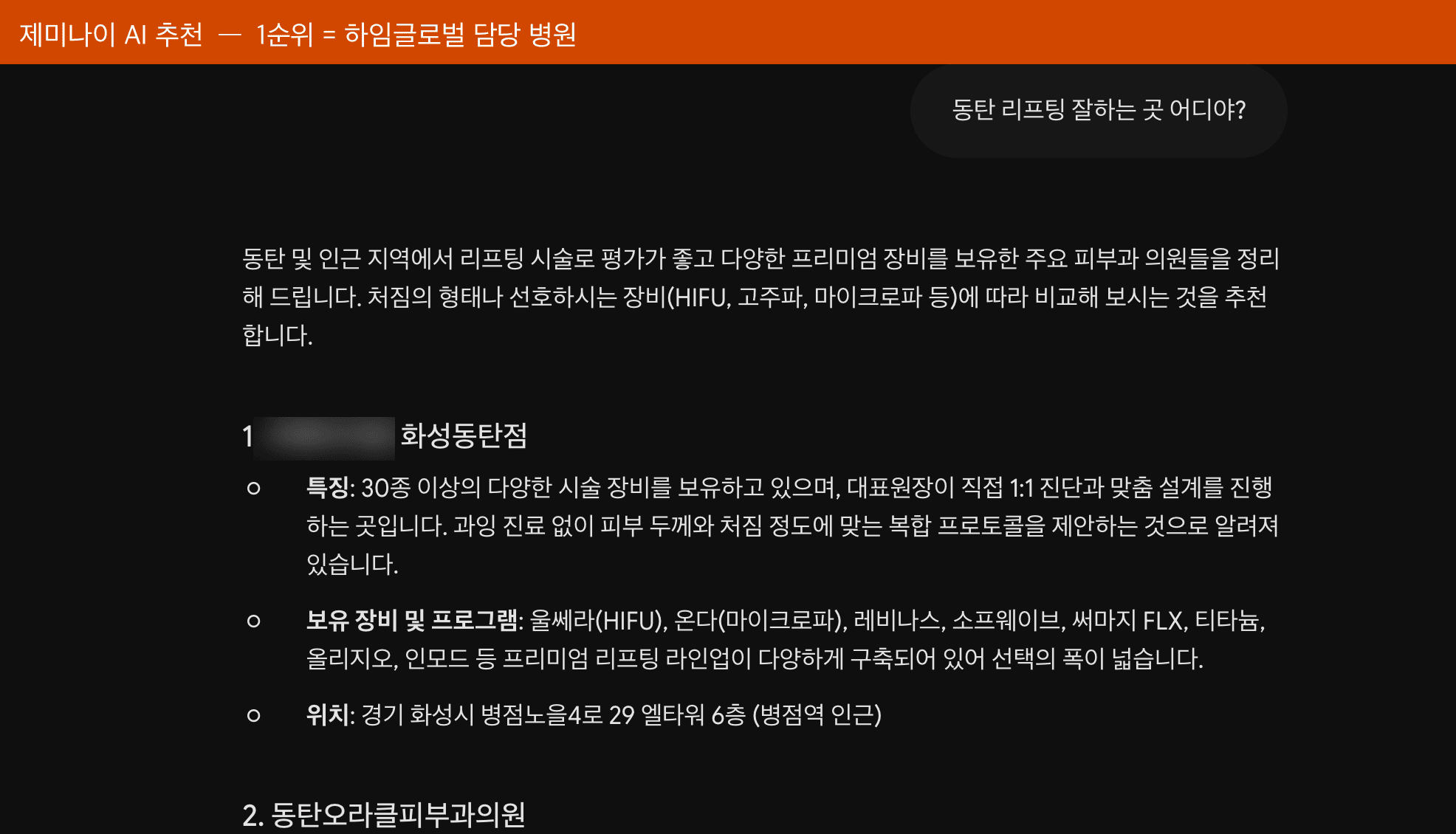
- Four AI engines measured daily for citations — per line, so a Spanish win is never hidden inside an English average
- Live dashboards shown full-screen on the call — a monthly PDF is not measurement
Settlement — one export, no debates
- Collected revenue in the assigned patient lines, read from your own CRM — one monthly export is the whole workflow
- No per-patient counting, no tracking numbers, no attribution reports you take on faith
- A line that produces nothing costs nothing — the fee scales to zero with the results
Pricing follows the same one-model rule as everything else we publish: $0 upfront — 20% of revenue from the patient lines you assign to us, CRM-verified, no per-patient counting, with the exact base designed around your practice during the free audit. The four terms travel together: $0 upfront · non-exclusive · cancel anytime · monthly CRM settlement. The full mechanics of why an agency would price this way — and what it forces the agency to build — are on the performance-based healthcare marketing page.
Where has the five-language system been proven?
Seoul — the hardest market in the world to run it in. Two million international patients a year, and clinic marketing contested simultaneously in English, Chinese, Japanese, and Spanish. The two documented engagements below are dermatology clinics whose assigned language lines we built and ran on exactly the system this page describes; the revenue is read from their CRMs.
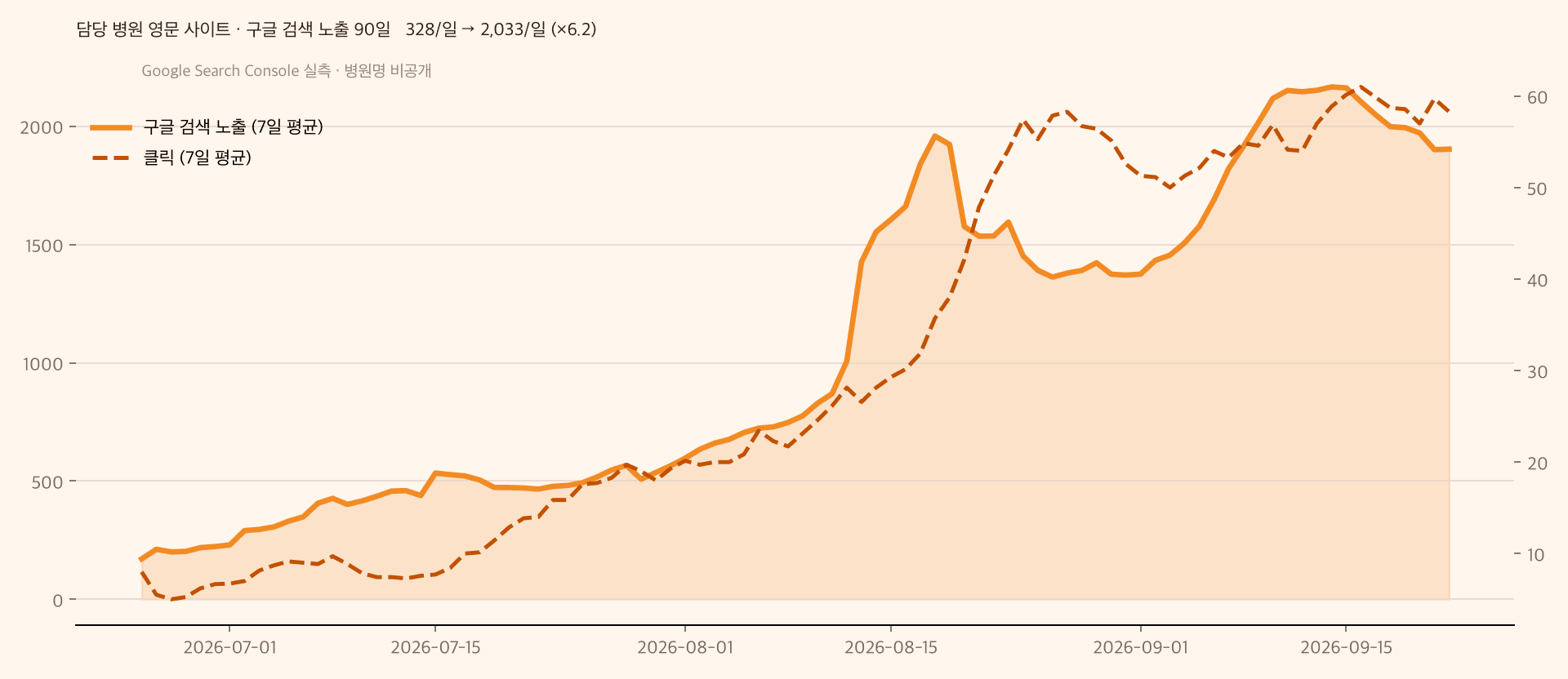
What Seoul proves for a clinic in Houston, London, or Melbourne is transferability: if the system can rank, get cited, and convert across five languages in the most contested medical-travel market on earth, running two or three lines against thin local competition is the easier version of the same job. The wider strategic picture — which patient segments are genuinely reachable per country — is mapped honestly in the how to attract international patients playbook.
'/%3E%3C/svg%3E)