
What is AI search optimization for clinics?
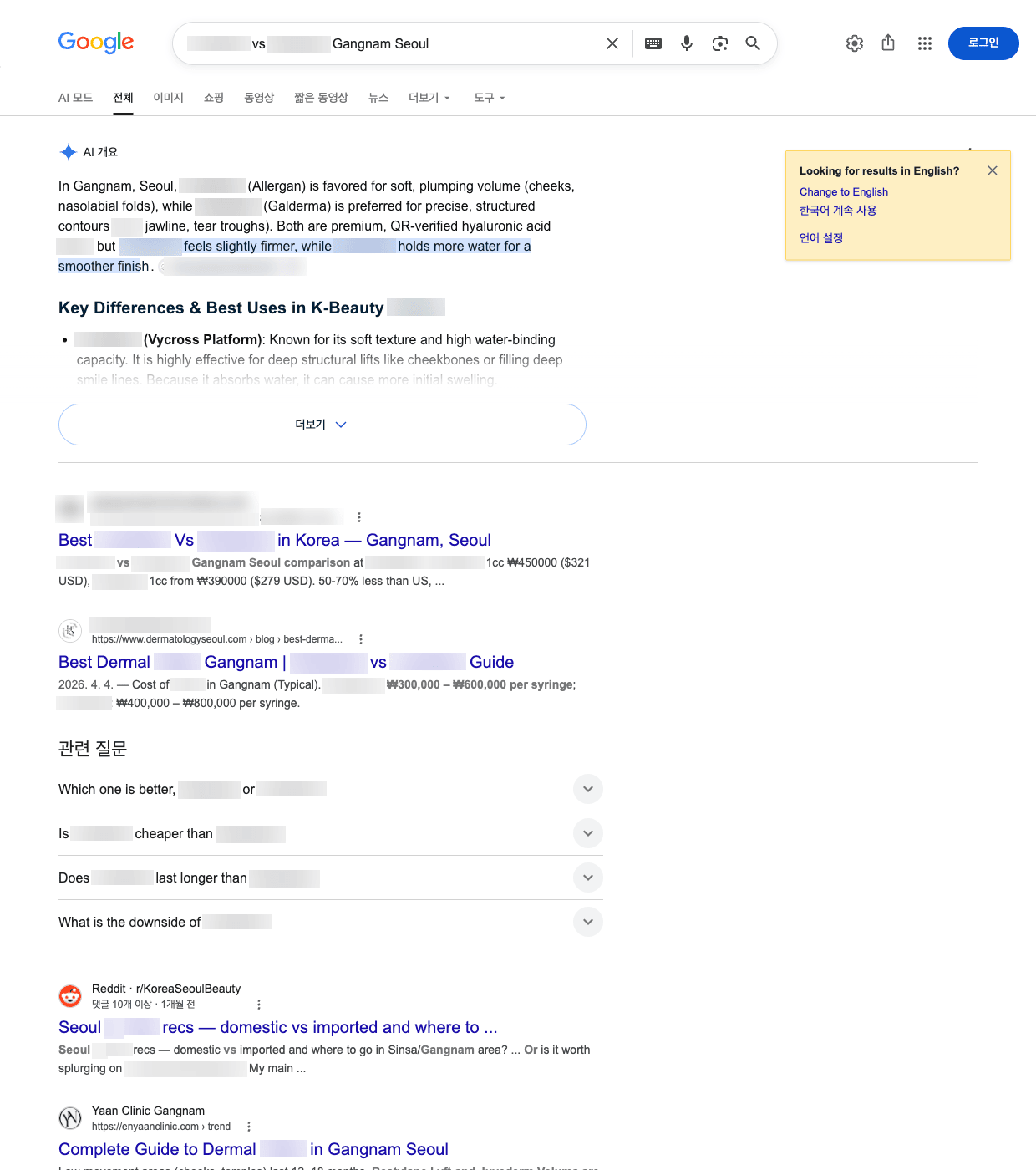
AI search optimization is the work of making your clinic the answer — the practice that gets named or cited when a patient asks ChatGPT, Gemini, Perplexity, or Google's AI Overview a question like “which clinic near me is good for this, and what does it cost?” The industry sells the same work under several labels — AEO (answer engine optimization), GEO (generative engine optimization), LLM SEO — but the mechanics don't change with the acronym: publish pages that answer real patient questions directly, structure them so machines can read them, earn corroboration engines trust, and measure whether you are actually being cited.
It is not a replacement for SEO; it is what SEO turns into when the results page stops being the destination. A patient who asks an AI assistant never sees ten blue links — they see one synthesized answer with a handful of citations. Either your clinic is inside that answer or it does not exist for that patient. Classic rankings still matter (AI Overviews sit on top of them, and engines lean on well-ranked sources), but the unit of competition has shifted from position to citation.
One scope note before the steps: this page is the how — the working method, whether you run it yourself or not. If you are past that and comparing vendors, the questions that separate real operators from rebranded retainer agencies are a different topic: see what a healthcare AEO agency does and what it should cost.
Why does this matter now — what actually changed?
Patient search behavior crossed a line. Gartner projected in 2024 that traditional search engine volume would drop 25% by 2026 as chatbots and virtual agents absorb queries — and that projection has become the industry's standard reference because it matches what clinic dashboards show: impressions holding, clicks thinning, and new patients saying “ChatGPT recommended you” at the front desk. Google itself now answers a growing share of health-adjacent queries with an AI Overview before any organic result is visible.
The uncomfortable part is that invisibility in AI search produces no alarm. Your rankings can hold steady while the layer above them — the synthesized answer — recommends someone else. Most clinics discover this by accident, months in. If you suspect it is already happening, the diagnostic pattern is common enough that we wrote it up separately: why your practice isn't showing in AI search results.
The opportunity is symmetric. Because most practices have done nothing, the clinics that build citable pages now are competing against thin air in most cities and specialties. That window is the whole reason this guide exists.
Step 1 — Audit: where does your clinic show up in AI answers today?
Start with evidence, not assumptions. Take the ten questions your front desk hears most often — price, safety, recovery, “who is good at X near me” — and ask them, phrased the way a patient would, across four surfaces: ChatGPT, Gemini, Perplexity, and a Google search that triggers an AI Overview. Record three things for each: are you named, who is named instead, and which sources the answer cites. Then repeat the run on another day, because AI answers are not stable — a single check is a coin flip, not an audit.
The cited sources are the strategic gold. They tell you exactly which pages the engines in your market treat as authorities — the surfaces you need to be present on, or better than. In most clinic markets the list is short and beatable: a directory, a couple of publisher listicles, one competitor who accidentally wrote a good FAQ.
If you'd rather not spend the afternoon: this audit, run properly across engines, languages, and days, is exactly what our free AI-visibility audit delivers — free, no obligation, and you keep the report either way.
Step 2 — Build answer-first pages engines can repeat
AI engines don't rank pages; they repeat sentences. The page architecture that wins citations is therefore almost boringly consistent: one page per real patient question, a heading phrased as the question, and a direct, complete answer in the first two sentences — before the background, before the brand story. Numbers beat adjectives: prices as ranges with dates, recovery in days, risks named plainly. Engines quote specifics; they paraphrase fluff into someone else's citation.
What this rules out is the traditional clinic website: five glossy pages about the doctor's philosophy, zero pages answering “how much does it cost and how long until I'm back at work?” It also rules out publishing ten pages and stopping. Patients ask hundreds of distinct questions per specialty, and coverage is cumulative — each answered question is another doorway into the same clinic. This is the volume wall where in-house efforts usually stall, and it is why our operating stat is 7,700+ pages, not 77.
A useful self-test before you publish anything: read only the first two sentences under your heading. If they don't fully answer the heading's question on their own, an AI engine won't finish reading either.
Step 3 — Add the structure machines read: schema, entities, consistency
Once the answers exist, remove every reason an engine might misread them. Three layers, in order of effort-to-payoff: schema markup — FAQPage on every question set, MedicalClinic or Physician for the practice, Service for each treatment line, all as valid JSON-LD; entity hygiene — one canonical clinic name, address, and practitioner spelling everywhere (site, Google Business Profile, directories), because engines resolve you as an entity and inconsistency splits your identity into two weaker ones; and crawlability basics — clean headings, fast pages, no answers locked inside images or PDFs.
Be honest about what schema does: it will not rescue thin content, and it is not a secret handshake. It is ambiguity removal — it lowers the engine's cost of citing you correctly. Thin content with perfect markup stays uncited; strong answers with clean markup get quoted with your name attached. (This page ships Article, FAQPage, and BreadcrumbList JSON-LD — the method marks itself up.)
How the engines weigh all of this when composing an answer — and what that means for where to spend effort — is its own subject: how ChatGPT and Google AI choose which clinics to recommend.
Step 4 — Earn the third-party corroboration engines trust
Engines are trained to distrust self-description — every clinic says it is excellent. What tips a citation your way is corroboration: your clinic appearing, consistently, on surfaces you don't control. In practice that means a complete and active Google Business Profile (the single highest-leverage third-party surface for local health queries), presence in the directories and publisher pages your Step 1 audit showed the engines already citing, and coverage or data on pages with independent editorial standards.
Sequence matters: corroboration amplifies answer-first content, it cannot replace it. A press mention pointing at a website with no citable answers sends authority nowhere. Build Steps 2–3 first, then point external signals at them — that is also the honest reason to be suspicious of any vendor selling “authority building” without a content layer underneath.
And keep your claims verifiable. Engines increasingly cross-check; so do patients. Specific, dated, sourced statements survive both. Inflated ones become the reason you are quietly excluded from answers — the same statistics engines themselves cite are collected in our AI search statistics for healthcare reference.
Step 5 — Extend into the languages your patients ask in
Here is the multiplier most guides skip: AI answers are language-local. Ask the same clinic question in Spanish and the engine composes its answer from Spanish-language sources; ask in Chinese, Chinese sources. If your market includes communities that think in another language — 68 million Spanish speakers in the US, the Chinese-speaking communities of Sydney and Melbourne — then English-only content makes you invisible in exactly the answers those patients read, no matter how strong your English pages are.
The method doesn't change, the corpus does: the same answer-first pages, natively written (not machine-translated — engines and patients both notice), with the same schema and the same measurement, per language. This is where operating leverage lives, because almost no local competitor does it: a worked example for the largest US case is in Spanish SEO for dentists.
The same pages then earn their second income: patients researching from abroad in their own languages find them too. Domestic patients build the base, international patients add the upside — one engine, both directions.
Step 6 — Measure citations daily, not monthly
The step that separates operators from bloggers. AI answers are volatile — the clinic cited on Tuesday can be swapped out by Friday as sources shift, models update, and competitors publish. A monthly screenshot is an anecdote. The working standard is a tracker that asks each engine your target questions every day and logs, per engine, per question, per language: were we cited, at what position, and which sources framed the answer.
We run this as a four-engine tracker — ChatGPT, Gemini, Perplexity, Claude — alongside daily Google rank tracking across 2,050 keywords, all built in-house. The point is not the dashboard; it is the feedback loop. Daily data tells you which page edits win citations back, which questions are contested, and where a competitor is gaining — while there is still time to respond. It is also the only honest way to report to yourself: if a vendor cannot show you live citation measurement on the sales call, they are not doing this work.
What does it look like when the six steps run? Proven in Seoul
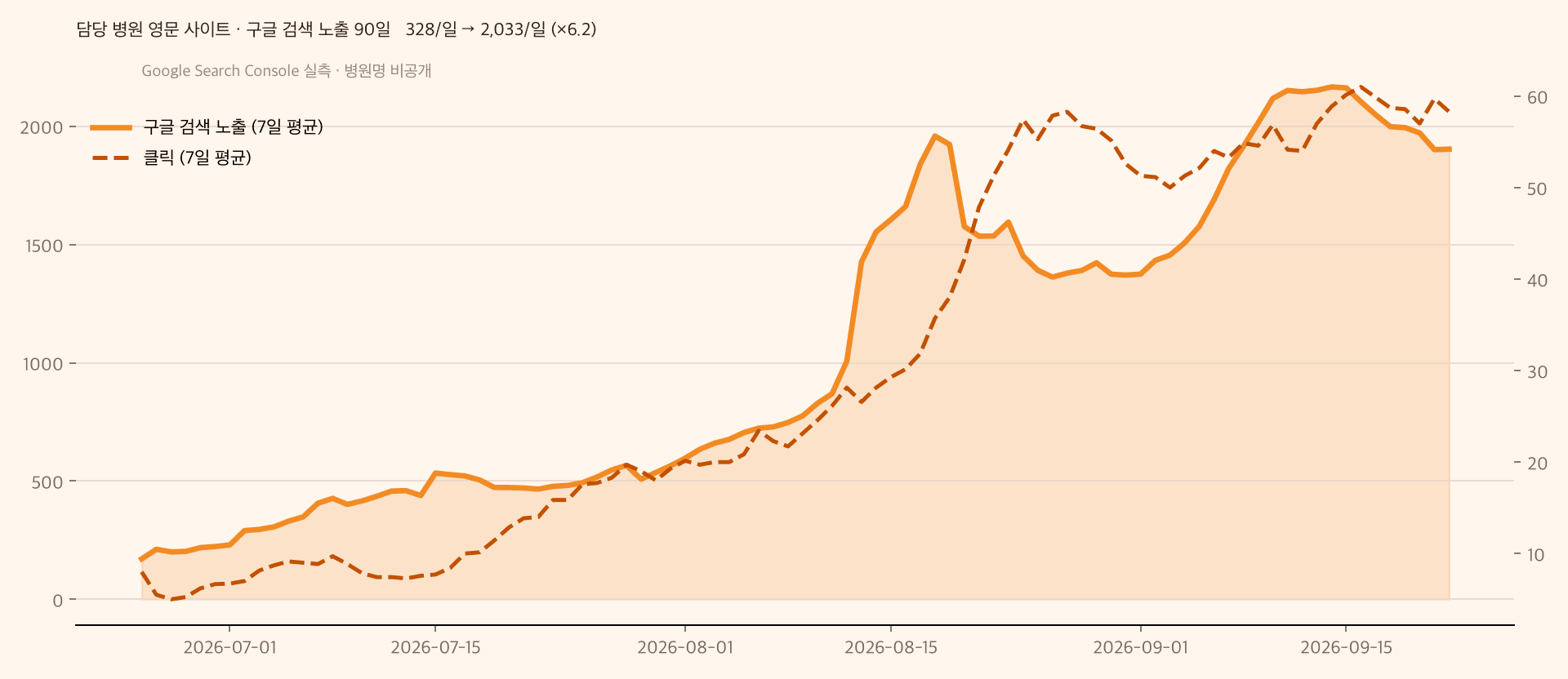
Seoul is the hardest place on earth to do this work: two million international patients a year, and medical marketing fought in five languages simultaneously. The six steps above are not theory — they are our daily operation there. Two documented cases, both dermatology clinics, both measured in the clinic's own CRM:
Should you run it in-house or have it operated?
Honest answer: start in-house today with Steps 1 and 2 — the audit costs an afternoon, and even ten genuinely answer-first pages will put you ahead of most local competitors. The wall arrives at scale: hundreds of questions per specialty, several languages, schema on everything, and four engines checked daily. That is a content-operations business, not a task a practice manager can absorb alongside a front desk.
The operated version, with us, prices like this and only like this: $0 upfront — 20% of revenue from the patient lines you assign to us, CRM-verified, no per-patient counting. The base is designed around your practice during the free audit, before anything is signed. Four terms always travel with the 20%: $0 upfront · non-exclusive · cancel anytime · monthly CRM settlement. While typical healthcare marketing retainers run $3,000–8,000 a month regardless of results, nothing is owed here until revenue shows up in your own CRM — if the pages don't produce, the 20% of nothing is nothing, and that is the correct price for non-results.
Either way, take the first step this week: know where you stand. The free AI-visibility audit shows you exactly where your clinic appears today across ChatGPT, Gemini, and Google — free, no obligation, and the report is yours even if we never speak again.
'/%3E%3C/svg%3E)