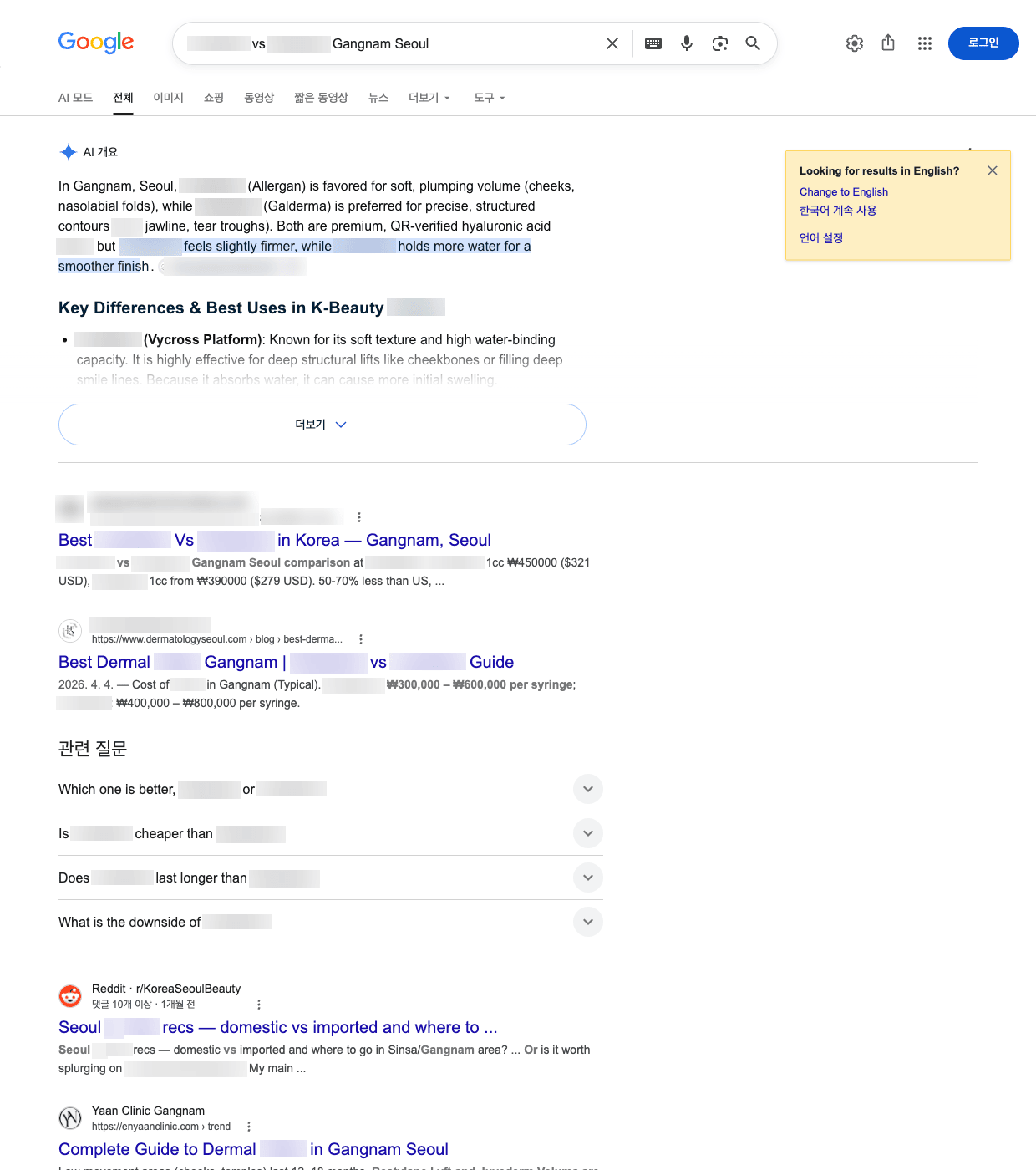
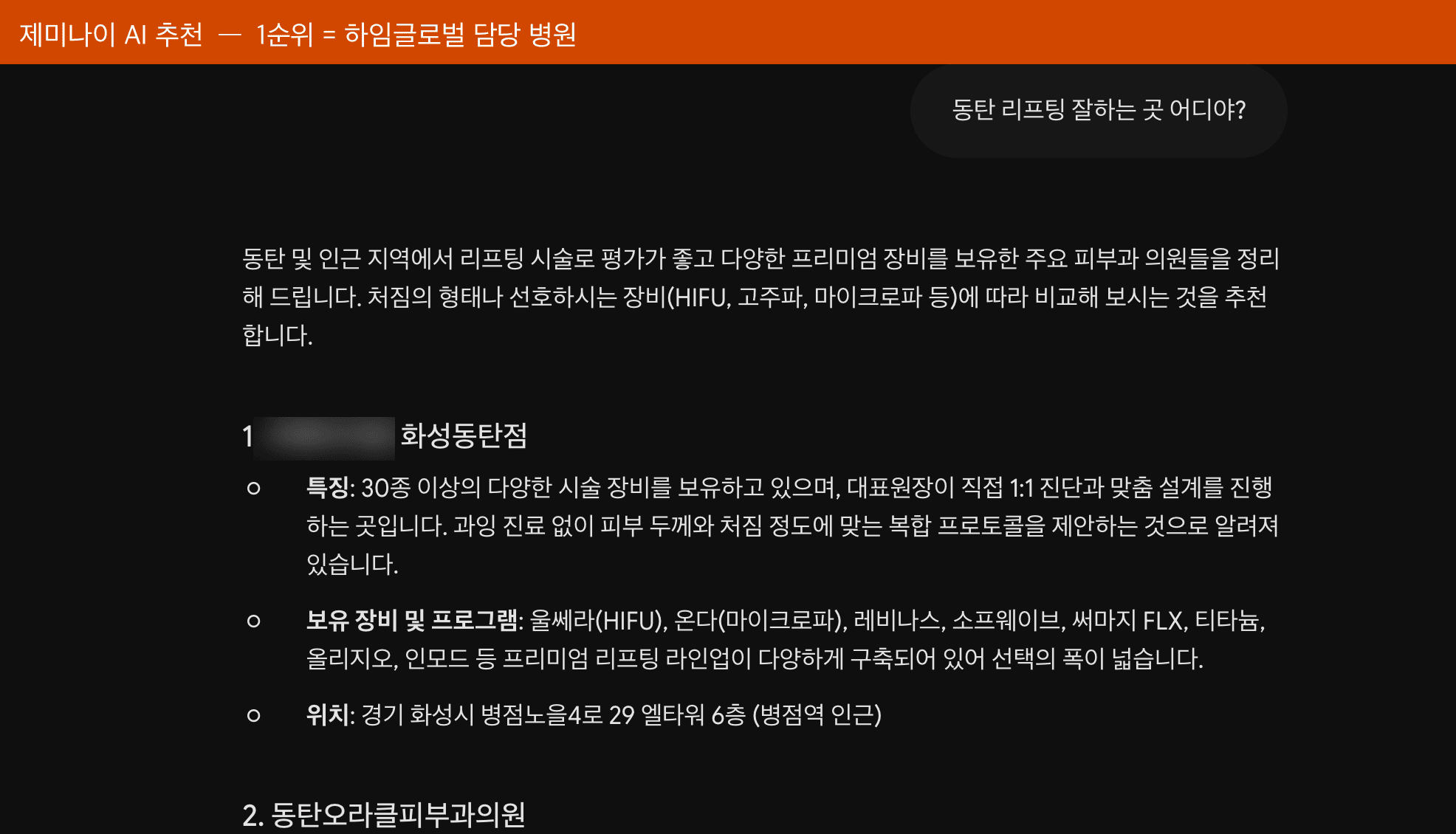
What is a healthcare AEO agency?
A healthcare AEO agency does two jobs. First, it builds the content assets that AI engines cite when a patient asks a real question — "which clinic near me does this well?", "is this procedure safe?", "what should it cost?" — pages shaped like answers, marked up with structured data, corroborated by third-party sources, and written to the advertising rules of your market. Second, and this is the part most vendors skip, it measures the result: whether ChatGPT, Gemini, Perplexity, and Claude actually cite the clinic, checked every day, question by question, alongside live Google positions.
The category is young and crowded with claims. Listicles now compare dozens of self-nominated "top healthcare AEO agencies," most of them retainer shops that added the acronym to an existing SEO deck. The fastest way to sort the field is to ask for the instrument: show me the tracker that proves an AI engine cited a client clinic yesterday. If the answer is a monthly PDF or a promise, you have your answer about the category they belong to.
We operate the instrument — and 7,700+ multilingual pages behind it — in-house. The screenshots further down this page are the actual dashboards, anonymized only where client NDAs require it.
How is AEO different from SEO?
The craft overlaps; the surface and the measurement do not. SEO earns you a position in a list of links that patients scroll and compare. AEO earns you a place inside the answer itself — the AI Overview that sits above the results, the recommendation ChatGPT gives by name. Patients increasingly never reach the list.
| What you're comparing | Traditional SEO | AEO (answer engines) |
|---|---|---|
| Where you appear | A ranked list of links | Inside the AI answer, cited by name |
| Patient behavior | Scroll, compare, click | Ask, read one answer, act on it |
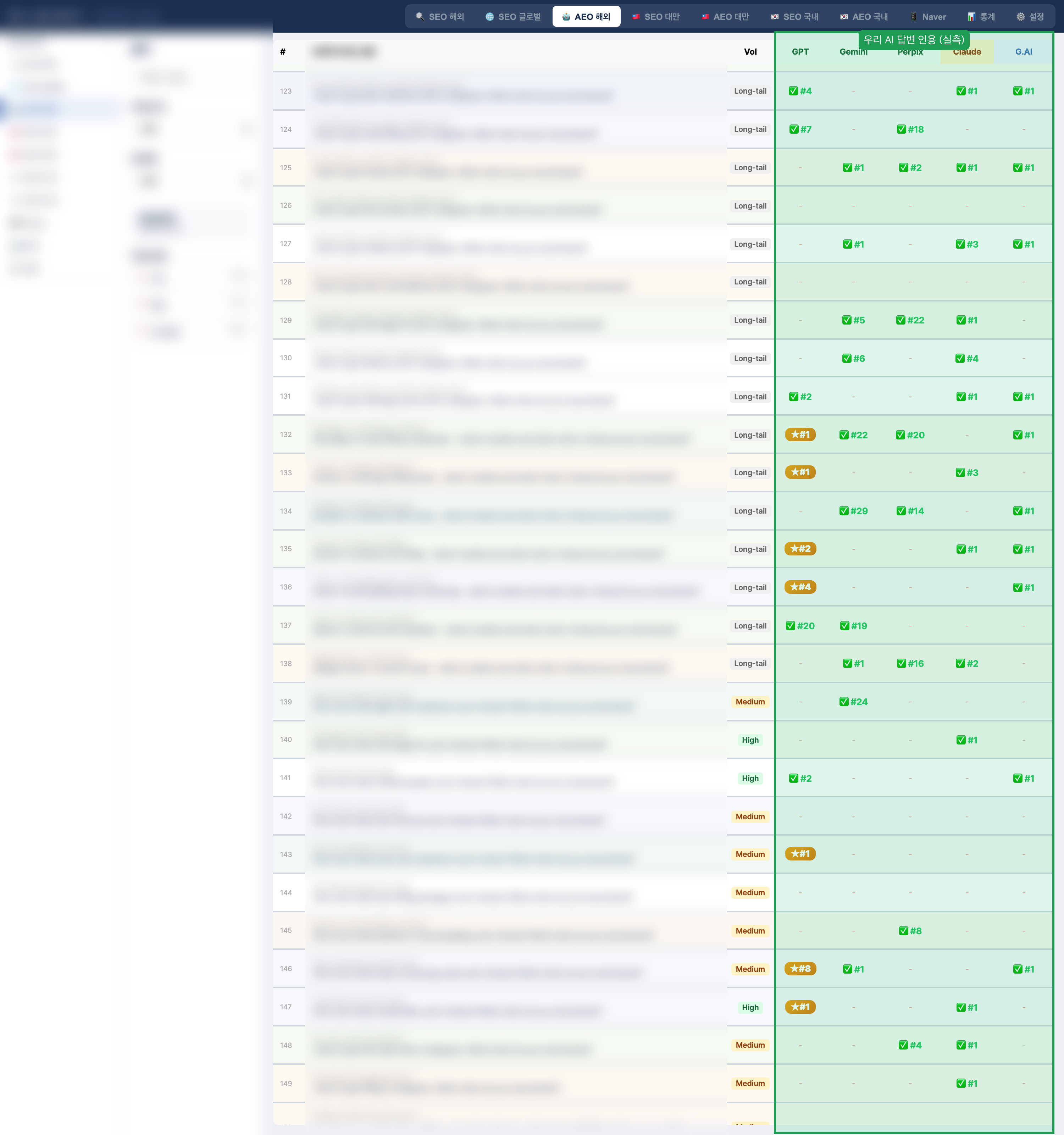
| How it's measured | Rank trackers (position #1–#10) | Citation logging across ChatGPT · Gemini · Perplexity · Claude, daily |
| What wins | Authority, links, technical health | Answer-shaped content, evidence, schema, third-party corroboration |
| What decays | Rankings, slowly, if neglected | Citations, fast, when fresher corroborated answers appear |
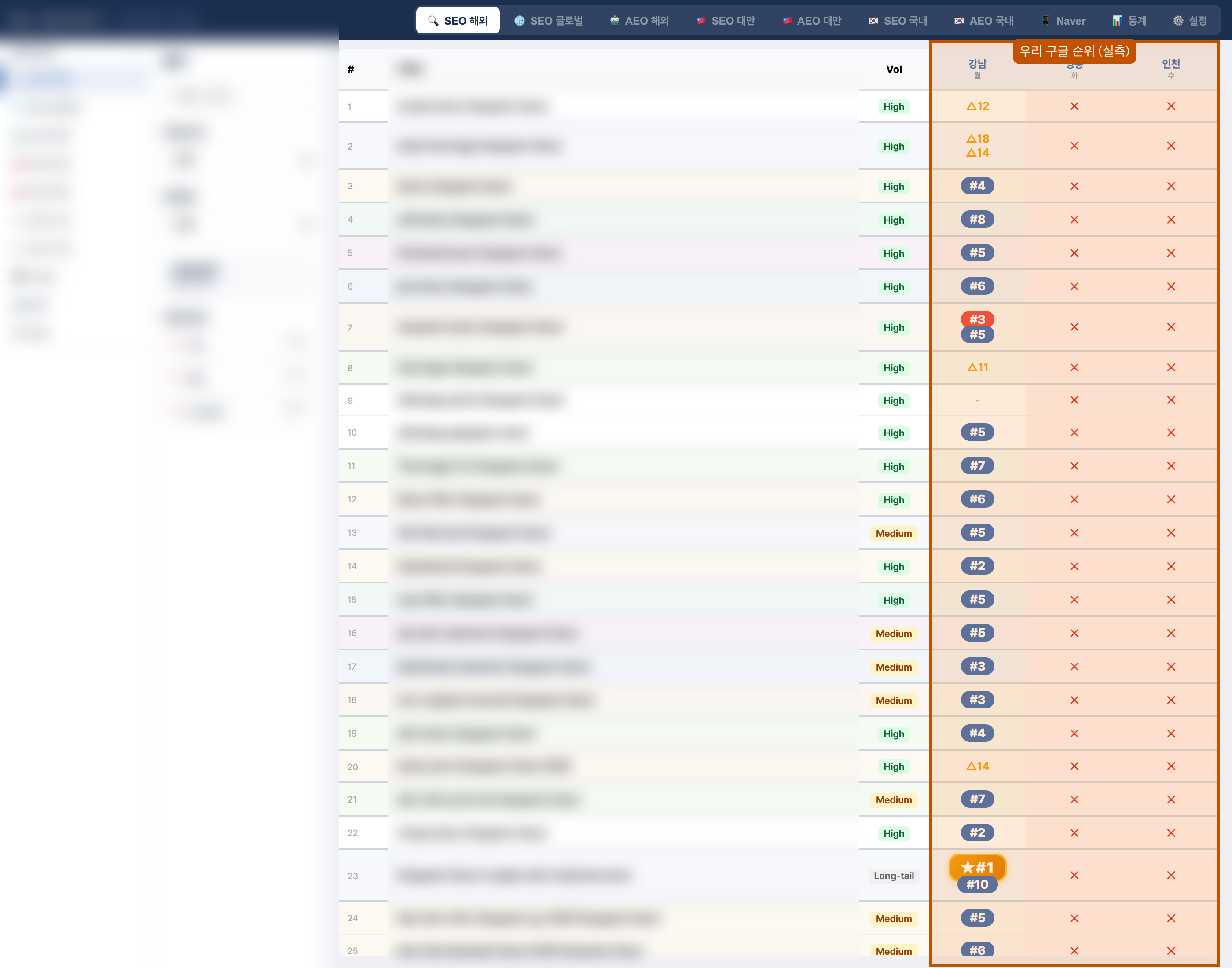
The two are not rivals — the pages that win AI citations are built on the same foundations that rank. That is why we run both instruments daily on every engagement: Google positions for 2,050 tracked keywords, and 4-engine citation logs. One without the other is half a picture. If your practice has already vanished from AI answers while holding its Google rankings, this diagnostic guide explains the usual causes.
Why is AEO a domestic-patient play first?
Gartner projects traditional search engine volume to drop 25% by 2026 as users move to AI assistants — the most-quoted number in the category, and consistent with what we see in the tracker: more of the questions that used to be ten blue links are now one synthesized answer. The people asking those questions about your specialty are overwhelmingly in your own city. AEO is not an exotic international add-on; it is the new front door of your local market.
So the sequence runs: domestic patients build the base, international patients add the upside. The English-language pages that get your clinic cited for local patients are the same pages international patients find from abroad — and the domain authority, citation history, and review signals compound in both directions. In the US and Australia, engagements usually start domestic-first; in the UK, inbound self-pay often leads. One engine, two revenue axes.
This also reframes what you should pay for. If the asset serves both axes, an agency charging you separately for "local SEO" and "international marketing" is selling the same engine twice. And if the fee is tied to revenue rather than activity, the distinction stops mattering entirely: 20% of revenue from the patient lines you assign — domestic, international, or both — measured in your own CRM.
The 4-engine tracker: what measured AEO looks like
These are screenshots of the instruments we run every day — not mockups. Clinic names and keywords are anonymized under NDA; on the audit call we walk you through the live originals, full-screen.
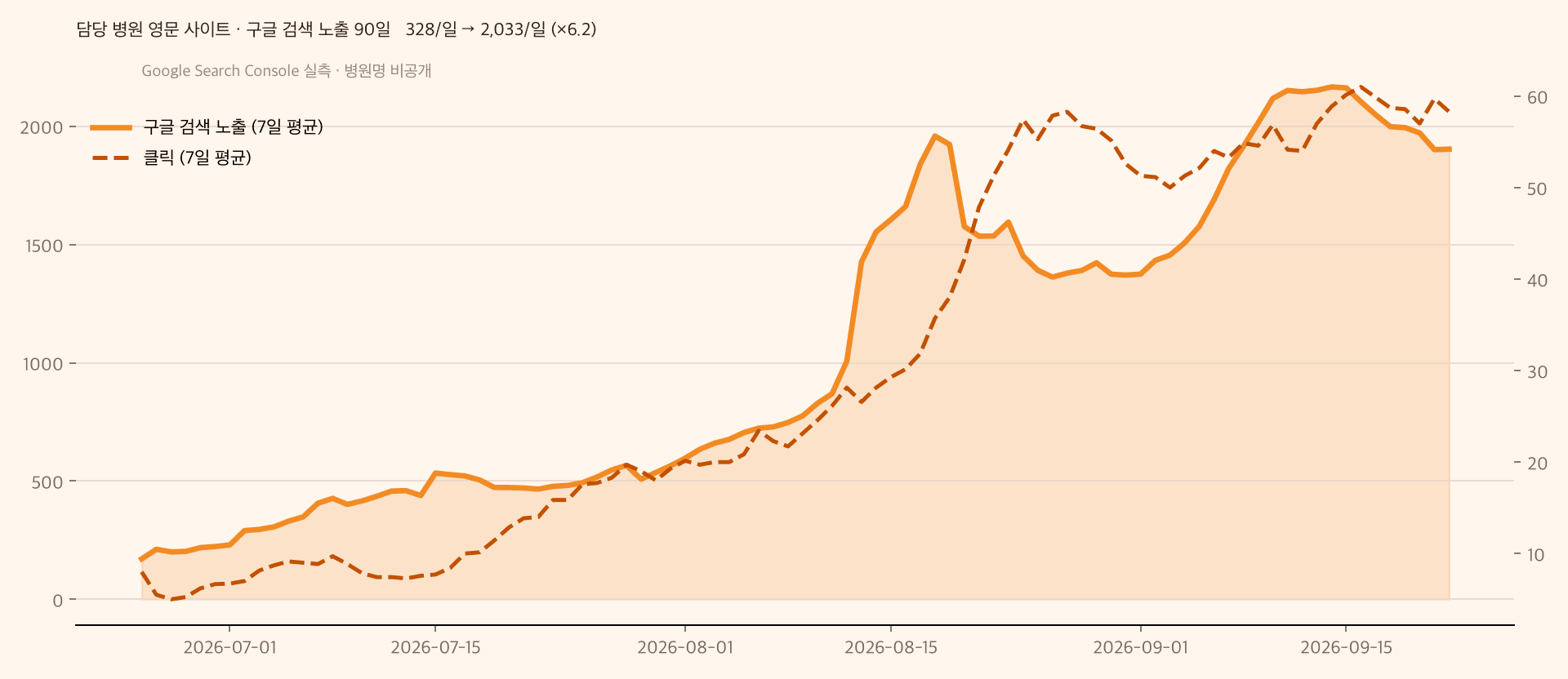
Downstream of the visibility, the number that finally matters: our two documented Seoul dermatology clinics reached +200% and +186% in foreign-patient revenue across the language lines we managed (internal CRM data, versus the prior baseline; individual results vary with specialty, location, and competition — clinic names withheld under NDA, with a full-screen dashboard walkthrough on the call). Seoul is the world's most competitive medical marketing arena — two million international patients a year, fought over in five languages — which is exactly why it is the right proving ground for a method we now apply in yours.
How do we get a clinic cited by AI? The methodology, in the open
Publishing the method is part of the proof — in a category this young, an agency that hides its mechanics is asking for faith. Ours has four moving parts, refined across the 7,700+ pages we operate:
1. Answer-shaped pages. AI engines cite pages that resolve a question completely: direct answer first, evidence next, edge cases after. We build each page around one real patient question — the phrasing patients actually type into ChatGPT, not the keyword an agency would pick — in every language the clinic serves.
2. Machine-readable structure. Schema markup (FAQ, Service, organization entities), clean heading hierarchies, and consistent entity data across every page — the difference between an engine understanding your clinic and merely crawling it.
3. Third-party corroboration. Engines trust what multiple independent sources repeat. Press coverage, directory consistency, and citation-worthy data pages give the engines corroborating signals that a lone website cannot generate about itself.
4. Daily measurement, weekly iteration. The 4-engine tracker tells us which questions we win, which we lost, and which fresher answer displaced us — so the content iterates on evidence, not opinion. A deeper walkthrough of the citation logic lives in how AI decides which clinics to recommend, and the clinic-side playbook in AI search optimization for clinics.
Every page ships to your market's rules — AHPRA's 2025 guidelines in Australia, GMC and ASA/CAP standards in the UK, FTC endorsement rules in the US — and you approve before anything goes live under your name.
What should a healthcare AEO agency cost?
The market answer: healthcare marketing retainers run $3,000–8,000 a month for a single location — results or not — and AEO is increasingly folded into those retainers as an unpriced add-on behind a custom quote. Our answer fits in one sentence: $0 upfront — our fee is 20% of revenue from the patient lines you assign to us, CRM-verified, with no per-patient counting. Nothing until revenue materializes in your CRM; content production, domains, hosting, the daily tracking you saw above, and the 24/7 multilingual response line are all funded by us.
The exact base is designed around your practice during the free audit, before anything is signed — which lines you assign (domestic, international, or both) and what is excluded automatically: existing patients, channels you run yourself, patient lines we don't manage, and any federal-program business in the US. Settlement is one monthly CRM export. Four terms always travel with the 20%: $0 upfront · non-exclusive · cancel anytime · monthly CRM settlement.
One clarification worth stating plainly: this is not a payment for sending patients. We never count, steer, or broker individual patients — the 20% is a flat marketing-services rate on a revenue pool we are responsible for growing. Have your healthcare attorney review the agreement; we expect it. The full reasoning behind the pricing — including why percentage models earned suspicion and how ours answers it — is in performance-based healthcare marketing.
| Term | How it works |
|---|---|
| Rate | 20% flat — the rate never moves, whatever the volume |
| Base | Collected revenue from the patient lines you assign — designed with you during the free audit |
| Verification | Your CRM — one monthly export, no per-patient counting, no receipts |
| Upfront cost | $0 — no retainer, no setup fee; tracking and response line included |
| Exclusivity | None — keep your current agency, run your own ads |
| Cancellation | Anytime — no lock-in, no termination fee |
What should you ask any AEO agency before signing?
Five questions separate the operators from the acronym-adopters, in one call. First: show me the tracker — live, during the sales call, logging real citations for a real client yesterday. Not a sample report. Second: which engines, how often? "We optimize for AI" without named engines and a measurement cadence is a slogan, not a service.
Third: what do I pay for? If the answer is a monthly retainer, you carry all the risk of an unproven category; if it is revenue verified in your own CRM, the agency carries it. Fourth: who owns the assets when we part ways? Pages, press coverage, and domain authority should stay with your clinic. Fifth: who carries compliance? Every page published under your name is your professional responsibility — ask to see how AHPRA, GMC/ASA, or FTC rules are built into the production process, not bolted on at review.
Our answers are on this page, and the audit exists so you can test them against your own market: where your clinic shows up today when patients ask ChatGPT, Gemini, and Google — free, no obligation. If your language mix includes Spanish-speaking communities, Spanish SEO for dentists shows the same methodology on the domestic multilingual axis.
'/%3E%3C/svg%3E)